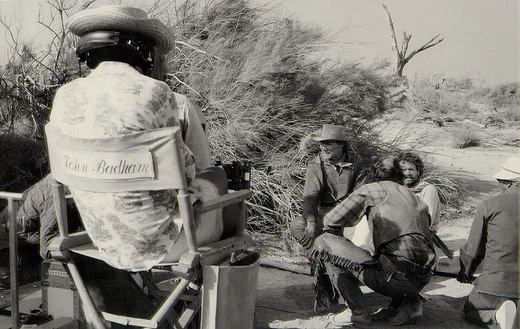
Arthur Penn
American director who helped launch the New Hollywood movement.
Arthur Hiller Penn (September 27, 1922 – September 28, 2010) was an American director and producer for film, theatre, and television. He earned three Academy Award nominations for Best Director and won a Tony Award, along with nominations for a BAFTA, a Golden Globe, and two Primetime Emmys.
Penn first gained notice as a theatre director, winning a Tony for staging *The Miracle Worker*. He received similar praise and his first Oscar nomination for the 1962 film version. His 1967 film *Bonnie and Clyde* is widely seen as sparking the New Hollywood movement by blending a biographical crime story with counterculture attitudes. He followed this with the comedy *Alice’s Restaurant* (1969) and the revisionist Western *Little Big Man* (1970), both critical and commercial successes that continued that ethos. Later notable films include the neo-noir *Night Moves* (1975) and the revisionist Western *The Missouri Breaks* (1976). In the 1990s, he shifted back to stage and television work, serving as an executive producer on the police procedural *Law & Order*.
Born in Philadelphia to a Russian Jewish family, Penn was the younger brother of photographer Irving Penn. His mother was a nurse, his father a watchmaker; both were from what is now Zarasai, Lithuania. After his parents divorced, he lived with his mother, then returned to care for his ailing father and ran his watch repair shop. Seeing Orson Welles’ *Citizen Kane* deepened his interest in film. Drafted into the Army at 19 during World War II, he served as an infantryman in the Battle of the Bulge. While stationed in Britain, he began directing and performing in shows for soldiers. After the war, he attended Black Mountain College, where he directed a production of Erik Satie’s *Le piège de Méduse* featuring R. Buckminster Fuller, Elaine de Kooning, and Merce Cunningham, and later appeared as a commentator in the documentary *Fully Awake* about the college.
After building a reputation directing television dramas, Penn made his feature debut with *The Left Handed Gun* (1958). Paul Newman played Billy the Kid as a psychologically troubled youth—a role originally meant for James Dean. The film was shot in 23 days, but Warner Brothers recut it against Penn’s wishes, adding an ending he disliked. It flopped in North America but found an audience in Europe. His second film, *The Miracle Worker* (1962), earned Oscars
- born
- September 27, 1922, Philadelphia, Pennsylvania
- died
- September 28, 2010, Manhattan, New York
- field
- Filmmaker, theatre director, producer
- nationality
- American
- known_for
- Bonnie and Clyde (1967), Alice's Restaurant (1969), Little Big Man (1970)
Lore & Background
Arthur Penn was born in 1922 to a Russian Jewish family in Philadelphia, the younger brother of photographer Irving Penn. During World War II, he served as an infantryman in the Battle of the Bulge and became interested in theater while stationed in Britain. After the war, he attended Black Mountain College, where he directed a production featuring R. Buckminster Fuller, Elaine de Kooning, and Merce Cunningham.
Penn first achieved prominence as a theatre director, winning a Tony Award for Best Direction of a Play for The Miracle Worker. He received similar acclaim and his first Oscar nomination for directing the 1962 film adaptation. His later films included the neo-noir Night Moves (1975) and the revisionist Western The Missouri Breaks (1976). In the 1990s, he returned to stage and television direction, including an executive producer role for Law & Order.
Reader's Guide
Arthur Penn's significance lies in his role as a key figure in the transition from classical Hollywood to the more personal, director-driven cinema of the late 1960s and 1970s. Bonnie and Clyde (1967) is widely regarded as the film that initiated the New Hollywood movement, blending violent crime with counterculture themes and influencing a generation of filmmakers. His subsequent works, such as Alice's Restaurant (1969) and Little Big Man (1970), continued to reflect that ethos, exploring anti-establishment narratives and revisionist takes on American history. Penn's career also demonstrated the challenges of studio interference, as seen with The Left Handed Gun and The Train, yet he maintained a reputation for directing acclaimed performances, with actors under his direction earning multiple Oscar nominations and wins. His later return to television production, including Law & Order, showed his adaptability. Penn received lifetime achievement honors from the Berlin International Film Festival, the San Francisco International Film Festival, and the Los Angeles Film Critics Association.
Did You Know?
- Penn was the younger brother of fashion photographer Irving Penn.
- He served as an infantryman in the Battle of the Bulge during World War II.
- He won a Tony Award for directing the stage production of The Miracle Worker before directing the film adaptation.
- He was an executive producer for the police procedural series Law & Order.
More in Film Directors - International 1-24
Spotted an error? Know more?
This is a living reference — every entry is fact-audited, and reader corrections feed straight into our audit queue. Suggest an edit · See this site's audit record